
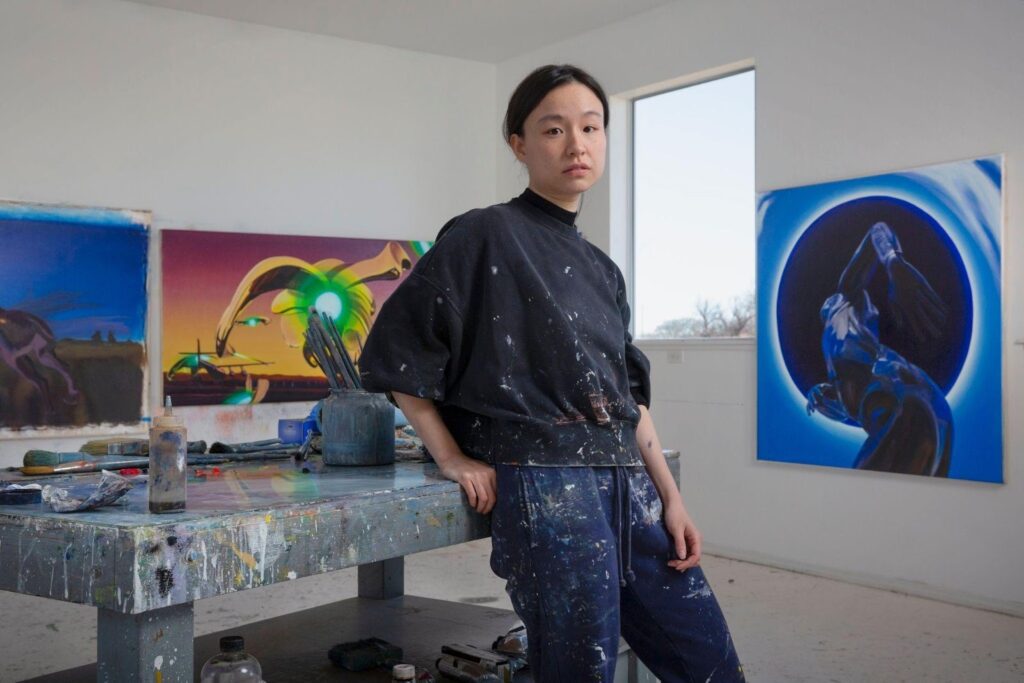
NB: All right, so tell us what are some of your earliest memories of making art, and how did you get into painting in the first place?
YJ: I was eleven when my family first moved to Canada. At the time, the teachers were on strike, and all the schools were closed. My parents were busy new immigrants trying to find jobs, and they didn’t know what to do with me. So I would go to the local library and flip through picture books because I couldn’t read English yet.
One day, I came across a Monet catalogue — horribly printed. I sat on the dirty carpet, flipping through it, when I suddenly started crying. It was strange because at eleven, I felt like I knew exactly what this old Frenchman felt when he painted his garden. The specific ways in which he was deeply in love with his life. I felt like I understood who he was at that moment, even better than I knew my own family and friends. I knew him from the inside, in his body, looking through his eyes.
How could I know these things? And why would knowing it make me cry? It was like some kind of witchcraft. I thought, “Wow, this is crazy technology” (painting).
I have always drawn and painted ever since I can remember, but since that moment in the public library, the bar was raised. Making art meant something different from that moment onward.
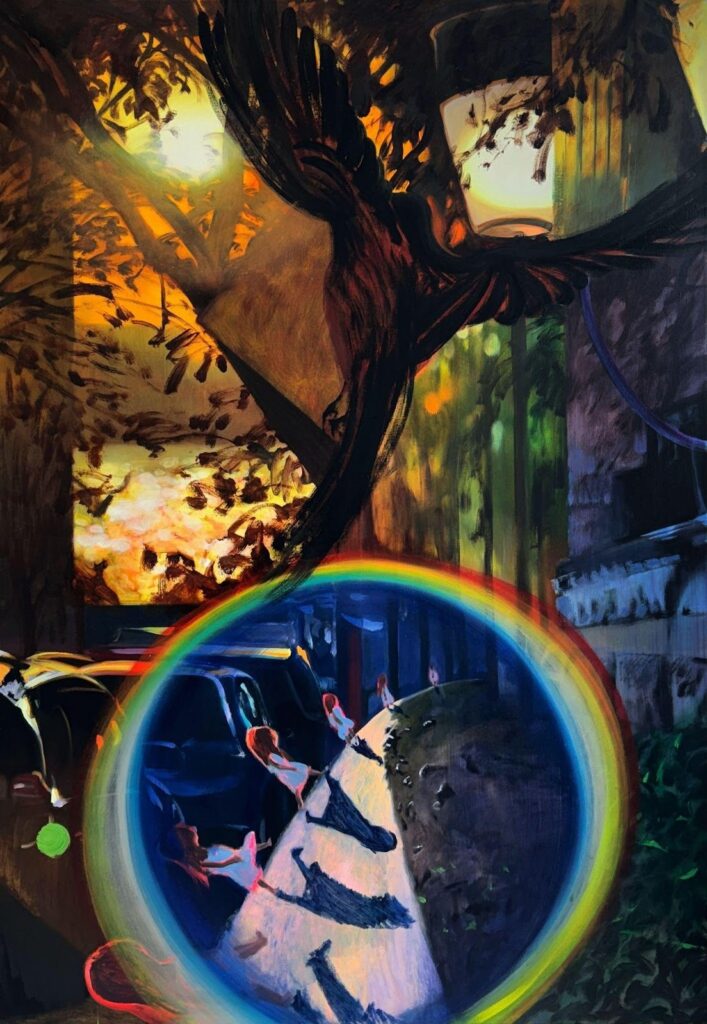
NB: You talk about Monet, but are there any other artists or forms of art — like film, music, or literature — that you reference or continue to return to throughout your work?
YJ: I love Borges. He did something radical for literature; he took ideas from mathematics and science and turned them into aesthetic experiences. I didn’t know that was possible before I read him. The idea of infinity, for example, was previously accessible only to mathematicians, but is now available to the layman. I also got to experience the sublime horror of infinity. That is an invaluable gift, not just to literature but to culture at large.
I want to do something like that for visual art. I don’t know exactly what that means or whether it’s possible. But I am confident it will work out somehow, for reasons I can’t explain.
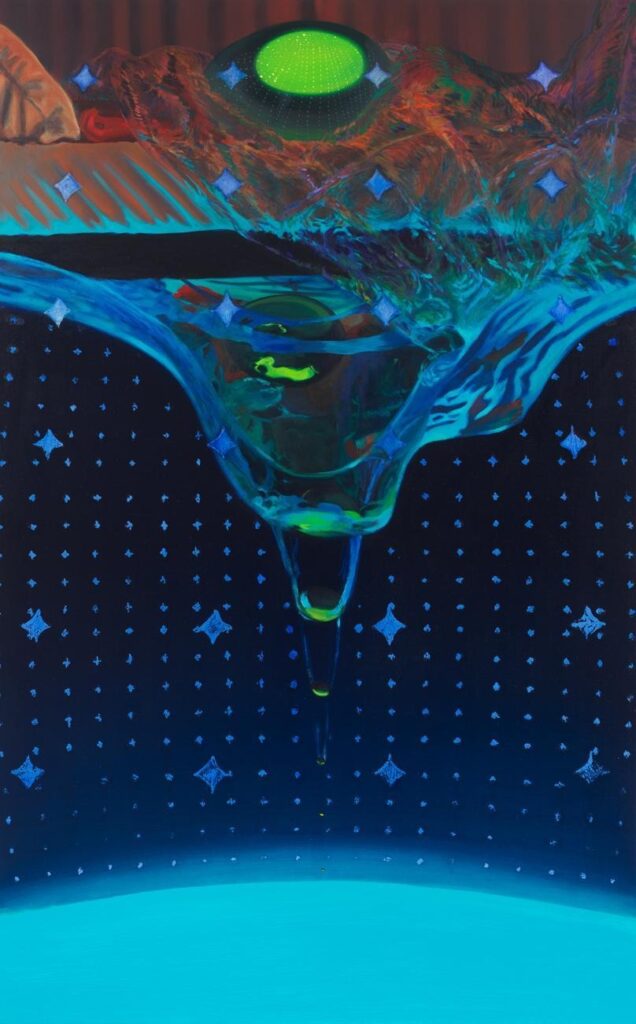
NB: You have a very clear narrative around each piece. Do your works begin with text, memory, image, or research? How do you move from idea to canvas? What does that process look like?
YJ: There are moments when sensory experience and logical structure come together to create a specific mood that couldn’t exist without both. That’s usually where the work begins.
Sometimes it starts from something real — a moment in actual life, other times it begins from a purely fictional place, a mental state I carry inside me that hasn’t necessarily happened in the world. More like describing an inner condition than documenting an external event.
NB: Do you go straight to the canvas?
YJ: I sketch. When an idea comes to me, I just put it in a notebook, with simple drawings. Eventually, I’ll sit down and do a digital sketch with color. At that point, when I can start to see the form, I ask myself: Do I need Photoshop? Do I need to build this in 3D space? Is there movement? Does it need to start as a photograph? I go through my toolbox to find what’s necessary.
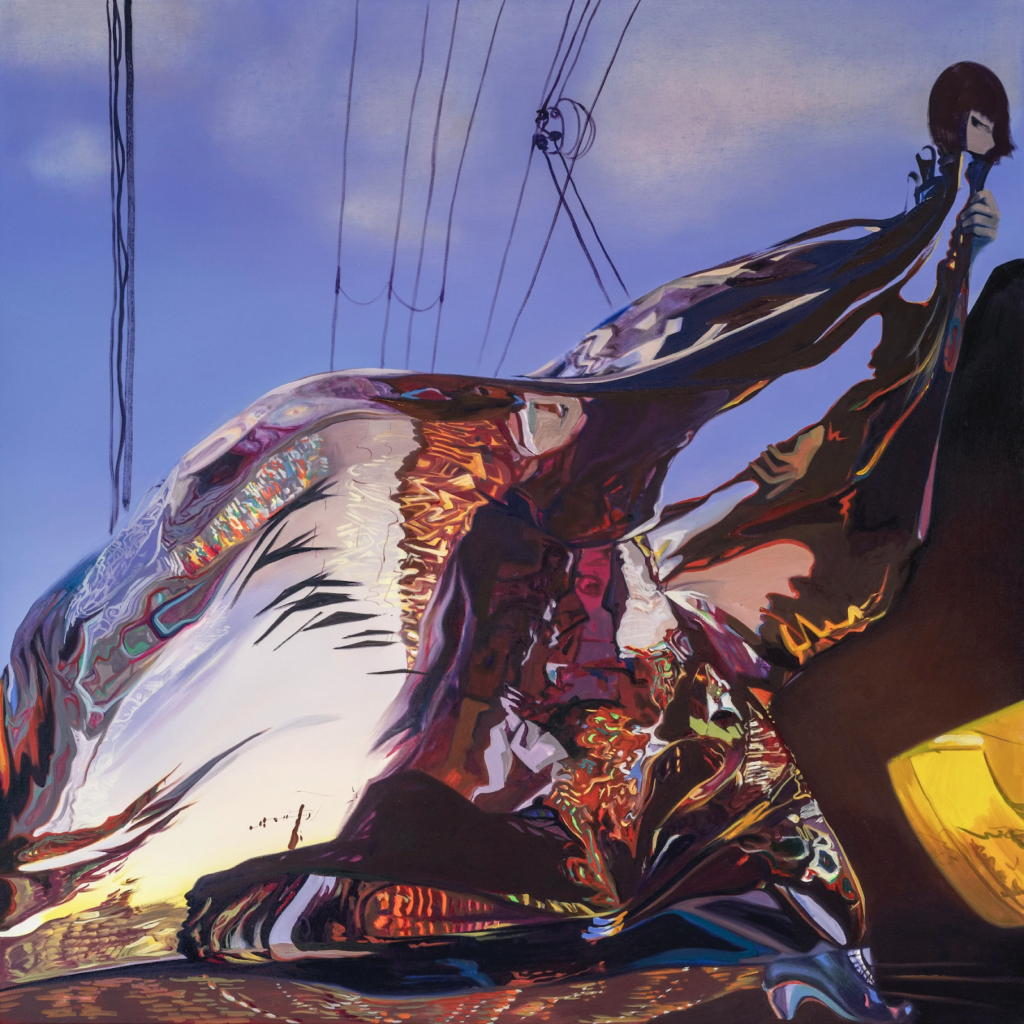
There’s a painting called Spring Lady that’s about the first smell of spring. That specific moment when you breathe it in for the first time. I was looking for that motion. A breeze. A whoosh. So I asked myself: How do I make a whoosh in a painting?
In this case, I built a 3D model on the computer and ran a simulation of a liquid-like fabric blowing in the wind. I adjusted the wind speed and the lighting and let the computer calculate an animated sequence. Then I selected a single still from the animation and used it as a reference while painting. When I’m at the canvas, I’m thinking about the whoosh, but I also have the reference from an actual “physical” simulation to refer to.
NB: So it’s a very technical approach to your work. You capture a feeling and then put it through computer animation and then bring it back to the canvas. That’s amazing.
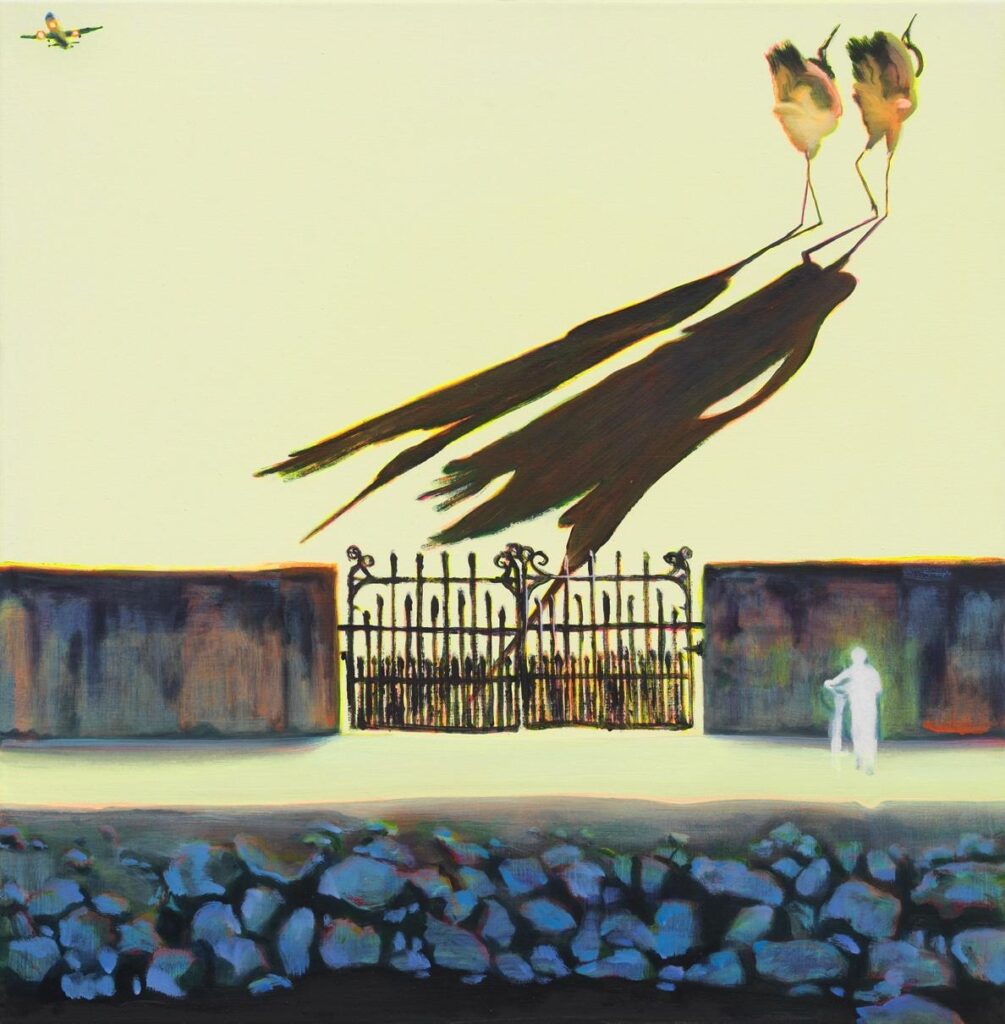
Why don’t you tell us about your exhibition at 56 Henry, I Wish Dying Could Be More Like This. How did this title emerge, and how does your personal experience with life and death inform the work in the show?
YJ: I had two deaths in my family last year. I lost my grandfather and my aunt.
It feels like traveling. You can imagine what it will be like when you finally arrive. You convince yourself you know what to expect, what you’ll do once you’re there. But no matter how much you anticipate it, when you arrive, it’s always a shock. Death is the same. I think everyone imagines the death of their parents at least once a day, if only for a split second. A slow private preparation. But when the day comes, it will still be a shock.
The entire space of death is still incomprehensible to me. The body is not your loved one, and so you think: where are they? The moment the machine stops beeping, you feel like that person is still in the room. And what do you make of that? I don’t have the language to make sense of it. What did they go through? What did they feel? What happened after? Does it even make sense to talk about after?
Death is a place we don’t have access to. Completely private. And all of our deaths will be private to ourselves. That impenetrability is what made me do the show. I can’t help them. I can’t truly empathize. So I can only fantasize. And I wanted death to be something bearable.
That’s where the title comes from: “I wish dying could be more like this.”
NB: It’s your hope, your fantasy — what you hope it was like for them.
YJ: Yes.
NB: So are there any upcoming projects or exhibitions or residencies that you’d like to share?
YJ: Right now I’m working on two animations. No shows planned at the moment. I am researching and prototyping. The animations often end up in galleries, biennales, or film festivals, depending on where they want to go.There’s also a mural at Rice University in Houston that’s up until September. A public commission for their pavilion called Cafeteria.